Translate this blog

Wednesday, 17 October 2012

The Loneliness of the Ocean

James has been deciding the watch patterns we will take. With four adults on board, watches should be fairly civilised. He initally planned us to do 3 hours on, 9 hours off plus a rota of 'jobs' to be done, eg checking sails, making water, preparing meals, schooling the children, updating competition control / the blog etc. He is now looking at an overlapping 4 hour watch pattern which will mean that we only do two hours at a stretch on our own with the first and last hours overlapping with another crew member which should ease the pressure during times of poor weather when we will need two on watch.

Common sense, and also race safety rules, mean we must carry adequate emergency equipment. We have owned a suitable liferaft for a few years now, and obviously we will insist on lifejackets on deck, particularly for the children. Matthew still cannot swim and is likely to panic if he hits the water, so he has a foam-type jacket, whilst Elizabeth is a competent swimmer and has an auto-inflating type as do the adults. We will also carry an emergency beacon and have a similar function built into the radio / GPS which will transmit our position in an emergency. Another means to raise the alarm will be via a quick message on the sat phone which we can set up to automatically update the blog and go directly to family at home. Finally, James is a firm believer that you should never enter the liferaft until you have to step up into it, as many voyagers have abandonned ship, never to be seen again, whilst their allegedly "stricken" vessel has later been recovered, still buoyant and intact. It is much easier for rescuers to locate a 15m yacht than a tiny liferaft as this recent news story from Australia demonstrates: Passenger jets help rescue missing sailor.
A man was rescued after being stranded at sea in his yacht.
The missing yacht spotted from low flying B777 yesterday

The children will also be involved in onboard tasks. Elizabeth is keen to cook and Matthew will be encouraged not to spend all day every day playing with his toys. There is also much schooling to be done, as well as the indirect education as we teach them about the culture, history and geography of the regions we will visit. At sea, there is opportunity to teach them about the weather patterns, marine currents, cllimate and pollution, whilst clear nights will offer vistas of dark skies filled with distant planets and stars. As we near Christmas, we hope the children will enjoy preparing the boat by making paper chains and other decorations, drawing Christmas cards, devising small gifts and even making Christmas crackers from saved toilet roll tubes. We should all stay busy!

Monday, 15 October 2012

Visa and Courtesy

We still haven't looked at where we might visit on touristic grounds, rather we are eliminating destiantions based of health and entry requirements!

The Caribbean is made up of a multitude of islands and states / territories, each with their own entry and visa requriements. It has taken hours of my life to trawl through Foreign Office guidance to check we are eligable to visit, what special customs are in force, what healthcare is available etc. I have now learned that poor Matthew will have to leave his favourite clothes behind as the wearing of camouflage is forbidden by law in several islands. I also need to be a bit savvy when packing my camera gear to ensure I don't fall foul of this law either.

Customs and Border Protection website
The biggest headache is the US Visa requirements. Under the Visa Waiver Program we may enter for up to 90 days but this inlcudes time spent in the Bahamas and Caribbean. Hm. We intend to visit the US last at the end of the time in the west. However, on close reading, it seems that this only applies to time spent in the Caribbean after initial entry to the US. As we are reaching Florida last heading north, we should be alright. The other requirement is to hold a ticket for exit of the US and surrounding territories. That's fine for me as I'm booked to fly home from Washington on April 29th, but I'm still not sure how they decide on a private yacht leaving under its own power. We may yet need to apply for a visa for James and the kids. Any advice gratefully received on this one!

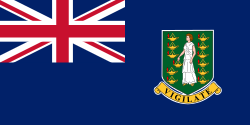
Flag etiquette is also proving troublesome. I have ordered courtesy flags for the independant states we may visit - Bahamas, Barbados, St.Lucia, St Vincent, St Kitts, Dominica, Antigua and the USA. The French territories are easy - we fly the Tricolore. The Dutch territories seem to require the Dutch Antilles ensign (which we don't have) but the British Overseas Territories remain unclear. As a British registered vessel, do we need a courtesy flag at all?
Flag of Britsh Virgin Islands
Civil ensign of British Virgin Islands
Rather than spend a small fortune on unnecessary bunting, we've chosen to compromise. I've ordered a small blue- and a small red-ensign and I shall carry some white cloth and waterproof pens - each of the British Overseas Territories fly a defaced red- or blue ensign so I hope to do the defacing with pens as necessary! Do you know which is for where?

    
Take one red or blue ensign, then add the following as required:


Health

Another planning issue is health and well being both during the crossing and whilst cruising the islands. As a regular blood donor, I was able to enquire about possible nasty diseases in Central America and the Caribbean. Some of the answers were quite surprising, and so we will be avoiding the Dominican Republic, Puerto Rico, Haiti and Great Exuma island in the Bahamas! All of our other potential destinations are free of exotic diseases (for now...) and require no further vaccinations or preventative medicines than Europe. However, we do plan to make all our own water rather than risk contaminating our on board supply with water of dubious origins from the smaller islands where it is advisable to boil drinking water.


First aid is a bit more serious. The Race rules stipulate that all crew must have a medical certificate deeming them fit for the ocean crossing. James will present himself and the kids to our GP tonight and I shall double mine up with my pilot medical on Friday. I have also been lucky enough to know a tame doctor who has come up with a list of medicines to carry. Unlike first aid on land which aims to stabilise a patient for only a matter of minutes prior to professional assistance arriving, at sea we will be a fortnight from land and most likely 72 hours from the nearest medical assistance. Cruise ships and naval vessels have well-equipped facilities so we'd need to hail something nearby to get a medivac for any casualty. 


Our first aid supplies (which we hope to leave unopened) includes strong pain killers, antibiotics, antihistamines, steroids and other generic drugs that should help stabilise someone for a few days following any foreseeable trauma or serious ailment. We also have a sat phone and will be able to speak to a medical specialist via Race Control during our passage who should be able to guide us as necessary. The trick is to be careful to avoid trauma on deck, keep good housekeeping to avoid food poisoning, and be lucky to avoid systemic ailments!

Provisioning

After crew and water, the next concern is food! Once we arrive in Barbados, we'll be able to provision again, but there are very few convenience stores mid-Atlantic. Another of James' wonderful mods has been to install a roomy fridge in the galley and, more recently, convert the quirky but impractical zinc-lined cool cabinet in the companionway to a chandlery store, chart table and chest freezer, enabling us to carry frozen provisions for our trip.


James thinks the crossing from Cascais should take four weeks, but with 4000 nautical miles to cover, it could take as long as 40. I sought advice from other boats and had some great ideas and stores lists from Andy and Fiona from "Atlantis". Some long-distance runs gave me plenty of thinking time and a provisions list was drawn up. All the dry stores and tins were bought back in July and stashed aboard before Croix des Gardes left the UK, but the fresh stores and meat to freeze will need to be bought in November in Cascais. We shall carry as much fresh bread as we can store/freeze but I have bought ample supplies of flour and yeast that we can make our own on passage. As a "virgin-baker", I had a practice at home and the results were surprisingly pleasing, with a couple of loaves, some pizza bases and a tray of chelsea buns all being pleasantly received by the guinea-pigs, sorry, family.
First attempt at chelsea buns

Meal plans:
I had to find foods which would keep, be easy to prepare on board in potentially heavy seas, and provide a variety of contingencies, ie do we have enough 'heavy' food if the water maker fails, can we still eat stuff if we lose all the cooking gas, etc.


Breakfast
  • Breads and jams
  • Porridge
  • Cereal
  • Fruit juice / tea / coffee
Lunch
  • Sandwiches / roll (cheese, ham, salami, tuna)
  • Soup (tinned and cupasoup)
  • Fruit
  • Cereal / chocolate bar 
Snacks
  • Packet biscuits and cake each day
  • "Creative baking" - scone mixes, cakes, buns, cookies, flappjack etc
Evening Meal - rotation of nine meals four/five times
  • Beef curry and rice
  • Pasta with pesto
  • Thai green fish curry
  • Sausages and mash with veg
  • Beef chilli and rice
  • Pasta bolognese
  • Fray Bentos pie, potato and veg
  • Cassoulet or moroccan chickpea tagine
  • Cottage pie (made with fresh mince or corned beef when we get more desperate)
Puddings
  • Selection of fruit crumbles, stewed fruit with custard, angel delight, jelly, more biscuits, home-made icecream (project for the kids as we empty the freezer)
Emergency supplies if we're stuck at sea forever.....
  • Tinned hotdogs
  • Tinned beans
  • Pasta with instant cheese sauce
  • Tinned meatballs
We'll also be at sea for James' birthday, and most likely for Christmas too so I've managed to squirrel away a few sneaky treats for a special meal on these days. We intend to cruise across in style!

Sunday, 14 October 2012

A World Education

We are indebted to our local primary school, whose Head so generously permitted us to take the children out of school for this grand tour. James has met many couples cruising with children on his ocean voyages, and all demonstrated that a cruising education allows children to absorb so much knowledge about their world. However, we need to ensure that they keep up with their peers at home so that they are not disadvantaged on their return in September 2013.

We had planned to be joined by a friend and primary teacher in Barbados, but planning so far in advance has meant that she is unable to commit now, leaving us to be the teachers. To this end, we have had the assistance of the school in advising us of the curriculum, and yesterday we purchased a mountain of study guides to work through on our voyage.

We have also been trying to apply the children's current homework to our voyage and this week the topic was "points of the compass." The children are now employed drawing a map of the Caribbean islands we intend to visit, and will then write a narrative describing our route in terms of basic directions. We'll have them both fluent in almanac work and sextant sightings by the time we return...

Friday, 12 October 2012

The Vaguaries of Airport Security

After fixing a route and ensuring the boat is sound and doesn't leak too much, the next priority is provisioning, and particularly water. James completed his previous ocean passages in the 10m sloop Dawn Wind of Kirribilli on dehydration rations - two litres per person per day for everything; drinking, eating, washing, the lot. On this trip, with six aboard including children, he plans to be less frugal. Last winter's work included fitting extra water tanks which brings our onboard capacity up to 400lts (33 days' supply), but he planned to fit a water maker, both for the passage and also to supply us in the islands where potable water uplift quality can vary. One 'bad fill' would contaminate our entire supply.


Water makers are expensive to buy as a unit so James used his engineering skills to source the individual components and make one bespoke. This has proved more of a challenge than expected, and today he flew to Lisbon with the last remaining parts in order to commission it this weekend. He'd also bought some extra safety equipment, including an inflatable danbuoy for a man overboard situation. This comes with CO2 cylinders and the supplier would not ship it direct to Portugal due to Dangerous Goods restrictions. Fortunately, I work for the airline and demonstrated that the carrier permits passengers to carry these cylinders so long as they are declared at check in. This was fine until James reached the infamous airport security. They decided the cylinders were too large and confiscated them. Had he checked them into his hold luggage, this would not have been an issue. Now we have to buy replacements in Portugal.


Moral - just because an item is permitted by the airline, doesn't mean it will get through security.

Race news - the last feeder race from St Tropez to Cascais is imminent and you can follow the boats arriving from the Med on the Transat Classique website. We received an email from the organisers stating they reserve the right to postpone the start if the weather proves too wild (or too light). We had not been looking forward to setting off on our race in heavy weather and had sort of planned to anchor up in the bay after starting if it looked too wild, so we are relieved to see this amendment to the race rules for this leg and hope it will be applied for the transat too.

Tuesday, 9 October 2012

The Grand Tour

Routing has been a key issue in the planning of the trip. We are unlikely to be competitive in the race part of the Transat Classique and so James has planned a route based on most favourable winds and comfort. Leaving Lisbon at the start of December brings the likelihood of poor weather in the first week. That we shall just have to deal with, but the plan is to blast south, past the Canaries and on to 20 degrees south to pick up the trade winds. Then we should have a steady downwind run to Barbados. Boats have gone faster on radical routes - one year the boat that took the most northerly path was victorious - but we should have a pleasanter crossing the traditional way.

Once we reach Barbados, we are hoping for a little R&R before we say adieu to Dave and Ollie and then wander off to explore. We definitely plan to spend some time in the beautiful St. Lucia where we had such a wonderful holiday 5 years ago, and then meander north hopping up the islands. For many reasons, we have chosen to miss out the Dominican Republic, Haiti and Cuba, and go straight across from the BVIs to the Bahamas where we plan to arrive in March. From there we will continue north, take in Cape Canaveral for Matthew and finally arrive in Chesapeake Bay to admire the wildlife there. Original plans had been to continue to New York but this may prove too ambitious, and the return transat should be in June to arrive back in the Solent for the BCYC Regatta in July.